EN
 CN
 RU



Explosion Proof Electrical Equipment Selection Guide for Industrial Projects
I use this explosion proof electrical equipment Selection Guide for Industrial Projects to connect process hazards with area classification, certification markings, equipment construction, installation conditions, and lifecycle control. Correct selection is not based on the product name alone. It depends on whether the location is classified under Class I/II/III Division systems or Zone systems, which gas or dust is present, how often the hazard occurs, and which authority approves the installation.
In practical terms, explosion-proof electrical equipment is designed to prevent electrical equipment from igniting a surrounding flammable atmosphere. Depending on the protection method, it may contain an internal ignition, limit energy, prevent heat accumulation, or maintain a controlled internal atmosphere. I recommend treating the selection as an engineering workflow rather than a catalog exercise, because an incorrect cable gland, temperature class, enclosure rating, or certificate can invalidate an otherwise suitable product.
Class, Division, Zone, gas group, dust group, and temperature class define the minimum equipment specification.
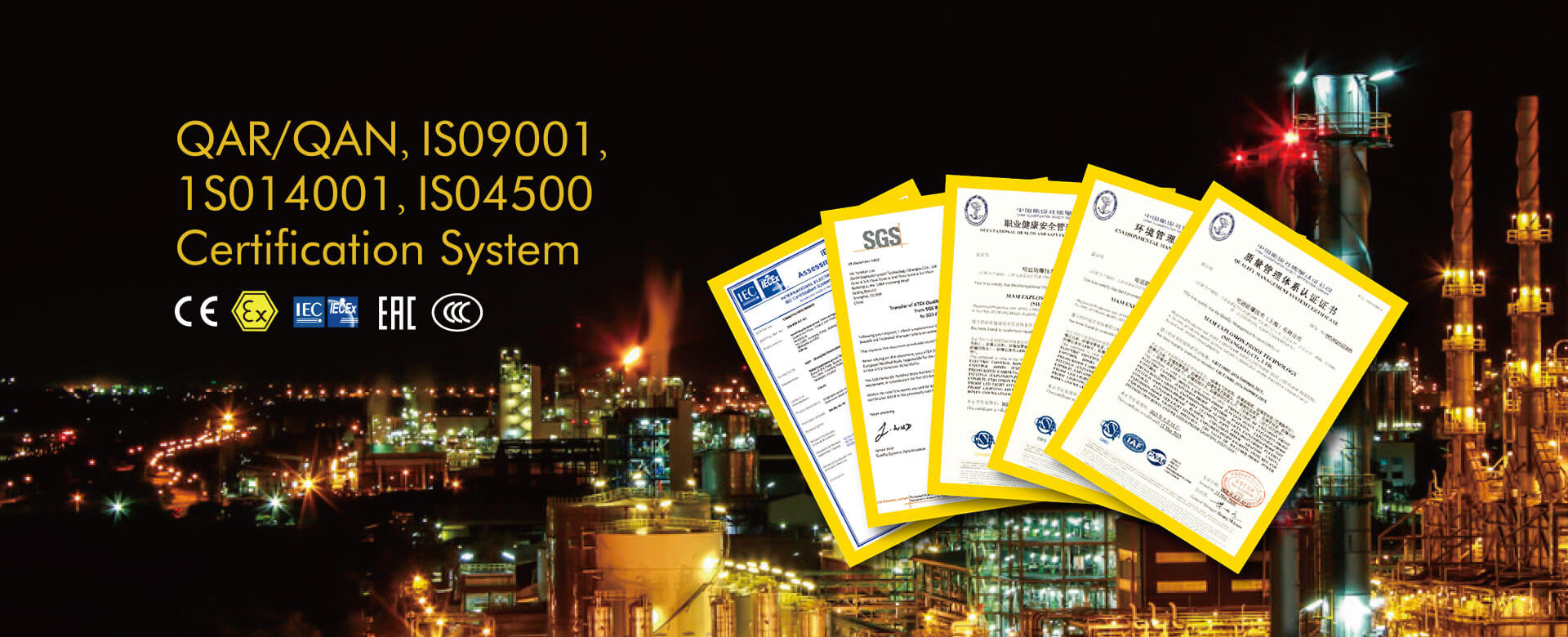
ATEX, IECEx, UL, NEC, and local approvals must match the installation jurisdiction and project documentation.
Explosion-proof, intrinsically safe, increased-safety, pressurized, and non-incendive methods serve different applications.
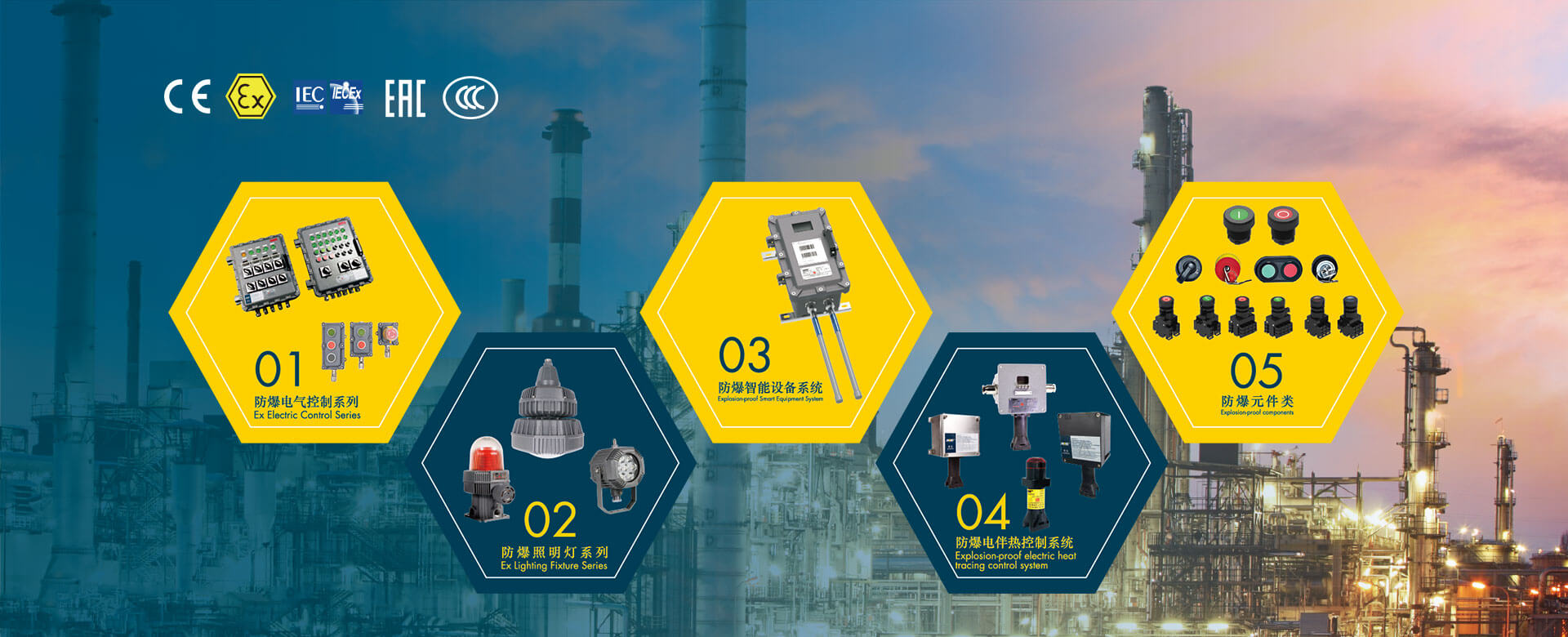
MAM supplies explosion-proof control panels, junction boxes, lighting, cable glands, enclosures, and automation equipment.
Procurement should verify certificates, marking details, installation limits, spare parts, inspection records, and replacement controls.
Explosion-proof electrical equipment does not remove the hazardous substance from a process area. Instead, it controls the relationship between an ignition source and the surrounding atmosphere. A flameproof or explosion-proof enclosure can contain an internal ignition and cool escaping gases through engineered joints, while intrinsic safety limits circuit voltage, current, and stored energy below ignition-capable levels.
Other protection methods work differently. Increased-safety equipment reduces the probability of arcs, sparks, and excessive temperatures during normal operation, while pressurized equipment uses a protective gas supply to keep hazardous gases outside the enclosure. Non-incendive equipment is generally intended for locations where flammable concentrations are not expected during normal operation, subject to the applicable certification and installation rules.
I evaluate every project against three connected criteria: the hazard, the approval basis, and the physical operating environment. A product that satisfies only one or two of these criteria may still be unsuitable for the final installation. The following factors should appear in the equipment schedule, purchase specification, and inspection records.
Hazardous area classification: Identify Class I, II, or III and Division 1 or 2, or Zone 0, 1, or 2. The classification reflects the type of hazard and the likelihood or duration of its presence.
Substance and ignition data: Confirm the gas group, dust group, minimum ignition temperature, and required temperature class. These values determine whether the enclosure or circuit can safely operate near the process material.
Certification and regulatory compliance: Match ATEX and IECEx certified equipment, UL or other North American approvals, NEC requirements, and local authority rules to the project location.
Environmental conditions: Check ambient temperature, humidity, corrosion, ultraviolet exposure, water ingress, impact, vibration, salt spray, dust accumulation, and cleaning chemicals.
Installation compatibility: Verify cable entry type, thread standard, conductor size, grounding method, conduit or cable system, enclosure orientation, access clearance, and maintenance procedure.
To select explosion-proof electrical equipment for an industrial project, I first classify the area and hazardous substance, then confirm the gas or dust group and temperature class. I next verify jurisdictional certification, choose the protection method, check environmental and installation requirements, and document every marking and limitation before purchase.
Classify the hazardous area. Obtain the latest area classification drawing and confirm whether the location uses Class/Division or Zone terminology.
Identify the hazardous material. Record the flammable gas, vapor, liquid, combustible dust, or fiber that may be present.
Determine gas or dust group and temperature class. Use process safety data and the governing standard rather than selecting from a general industry category.
Confirm certification and jurisdiction. Check whether the project requires NEC and UL approval, ATEX, IECEx, or another local certification route.
Select the protection method. Compare flameproof or explosion-proof, intrinsic safety, increased safety, pressurization, and non-incendive construction.
Verify environmental and installation requirements. Confirm enclosure ratings, cable entries, ambient temperature, corrosion resistance, wiring method, and mounting restrictions.
Document the final specification. Record the complete marking, certificate number, product revision, accessories, inspection criteria, and approved replacement parts.
The Class/Division system commonly identifies Class I locations for flammable gases or vapors, Class II locations for combustible dust, and Class III locations for ignitable fibers or flyings. Division 1 generally indicates that the hazard may exist during normal operations or frequently because of maintenance, leakage, or process conditions. Division 2 generally indicates that the hazard is confined within closed systems or is expected only during abnormal conditions.
The Zone system uses Zone 0, Zone 1, and Zone 2 for gases, vapors, and mists. Zone 0 represents continuous, long-term, or frequent presence; Zone 1 represents likely presence during normal operation; and Zone 2 represents presence that is not likely during normal operation but may occur for a short period after an abnormal event. Dust hazards use corresponding zone designations under the applicable standards.
| Classification system | Typical hazard basis | Selection implication |
|---|---|---|
| Class I, Division 1 | Flammable gas or vapor may exist during normal operation | Equipment must be approved for the specific Class, group, and temperature requirements |
| Class I, Division 2 | Flammable gas or vapor is normally contained or present during abnormal conditions | Non-incendive or other approved methods may be suitable when the marking permits |
| Zone 0 | Explosive gas atmosphere exists continuously or for long periods | Equipment requires the protection level specified for Zone 0 service |
| Zone 1 | Explosive gas atmosphere is likely during normal operation | Select equipment marked for Zone 1 and the correct gas group and temperature class |
| Zone 2 | Explosive gas atmosphere is unlikely during normal operation | Zone 2 equipment may be acceptable if all environmental and installation limits are met |
I never translate Class/Division and Zone designations by assumption. A Class I, Division 2 label does not automatically establish Zone 2 suitability, and a Zone 1 certificate does not automatically satisfy a North American installation. The project engineer, authority having jurisdiction, and certification documentation must establish the accepted equivalence.
Certification should be reviewed as a complete marking, not as a logo on a product page. For North American projects, I check the approval body, product standard, Class or Division, group, temperature code, ambient range, and any conditions of use. NEC requirements also affect wiring methods, sealing fittings, grounding, conduit, cable entries, and installation workmanship.
For European and many international projects, ATEX and IECEx certified equipment may be required. ATEX certification supports equipment use within the applicable European regulatory framework, while IECEx provides an international certification system based on the IEC 60079 series and related requirements. Neither certificate should be treated as a universal installation permit because the final project may still require local approvals, national deviations, inspection records, and qualified installation personnel.
I request the following documents before purchase:
Certificate or listing document with the exact model and product family.
Full hazardous-area marking, including protection method, group, temperature class, EPL, and ambient limits.
Installation instructions specifying cable glands, conduit seals, torque values, orientation, and enclosure opening restrictions.
Routine test records, inspection requirements, and approved repair or replacement procedures.
Material data for seals, windows, coatings, fasteners, and corrosion-resistant components.
Declaration of conformity or local approval documents where required by the project.
The difference between explosion-proof and intrinsically safe equipment is based on how ignition risk is controlled. Explosion-proof equipment normally uses a specially constructed enclosure to contain an internal ignition and prevent flame transmission to the surrounding atmosphere. Intrinsically safe equipment limits electrical and thermal energy so that a spark or heat-producing fault cannot ignite the specified hazardous atmosphere under defined conditions.
Intrinsic safety is often suitable for measurement, instrumentation, sensors, communication loops, and low-power control circuits. Explosion-proof construction is often selected for lighting, motors, switches, control panels, junction boxes, and power distribution where the equipment requires higher energy or mechanical enclosure protection. The correct choice depends on power level, maintenance method, system architecture, certification marking, and the feasibility of installing barriers or isolators outside the hazardous area.
| Protection method | Main control principle | Common applications | Main selection concern |
|---|---|---|---|
| Explosion-proof or flameproof | Contains internal ignition and limits flame transmission | Lighting, panels, switches, junction boxes, motors | Enclosure joints, cable entries, group, temperature class, and installation integrity |
| Intrinsic safety | Limits voltage, current, and stored energy | Sensors, transmitters, communication, instrumentation | Entity parameters, barriers, wiring separation, and loop certification |
| Increased safety | Prevents arcs, sparks, and excessive temperature in normal service | Terminal boxes, motors, luminaires, transformers | Component construction and permitted fault conditions |
| Pressurization | Maintains protective gas pressure inside equipment | Control rooms, analyzers, large panels, rotating equipment | Purge sequence, pressure monitoring, clean air supply, and alarms |
| Non-incendive | Prevents ignition during normal operation | Division 2 or Zone 2 control and signaling equipment | Limited use during abnormal conditions and exact certification scope |
For lighting, I specify the classified area, illumination level, voltage, wattage, operating temperature, ingress protection, corrosion exposure, and maintenance access. Hazardous-location luminaires should be selected with the correct gas or dust approval and should not be modified with unapproved lamps, drivers, cable glands, or mounting accessories. For outdoor oil and gas sites, salt spray, ultraviolet exposure, condensation, and mechanical impact often control the enclosure and material requirements.
For control panels and junction boxes, I verify circuit voltage, current, terminal capacity, enclosure volume, heat dissipation, cable entry arrangement, grounding, and access frequency. A panel with the correct area marking may still fail the project specification if its cable glands, drain fittings, viewing windows, or internal components are not covered by the certification. I also check whether the assembly is factory-certified, field-evaluated, or subject to a limited production approval.
For chemical, pharmaceutical, and food-processing facilities, dust accumulation and cleaning methods require special attention. Powder handling can create combustible dust hazards that differ from gas and vapor classifications, and washdown chemicals may attack seals, coatings, or stainless-steel surfaces. In pharmaceutical production, the equipment specification should also consider cleanability, surface finish, hygienic design, and whether the certification remains valid after routine sanitation procedures.
NEMA and IP ratings address enclosure protection against solids and water, but they do not replace hazardous-area certification. I use the NEMA or IP requirement to evaluate rain, washdown, dust, and ingress exposure, then separately verify the Ex marking. The ambient temperature range must also be checked because the maximum surface temperature can change when equipment operates above or below the certificate’s stated conditions.
Cable glands and bushings deserve the same engineering attention as the enclosure. The gland must match the cable construction, armor, thread type, sealing method, gas group, temperature range, and certification conditions. During installation, I require controlled torque, correct sealing components, grounding continuity where applicable, and inspection of flame paths or protective joints without unauthorized machining or coating.
Before issuing a purchase order, I compare the equipment schedule against the certificate and the latest area classification drawing. I verify model suffixes, voltage, frequency, enclosure material, coating, cable entries, accessories, spare parts, and delivery documentation. A generic statement such as “explosion-proof type” is insufficient because it does not identify the class, group, temperature code, protection method, or jurisdictional approval.
Commissioning should include document review, visual inspection, marking verification, cable entry inspection, grounding tests, functional testing, and confirmation that protective systems such as purge or intrinsic-safety barriers are correctly configured. The inspection record should identify the equipment tag, certificate, serial number, installation location, installer, date, and outstanding corrective actions. These records create a baseline for future maintenance and reclassification.
Maintenance teams should follow the certificate and manufacturer instructions for opening enclosures, replacing seals, tightening fasteners, cleaning flame paths, and installing spare parts. Process changes can alter the hazardous substance, release rate, ventilation, temperature, or area boundary, so the original classification must be reviewed after major modifications. Replacement parts should be traceable to the approved product specification rather than selected only by physical dimensions.
MAM is an explosion-proof electrical equipment manufacturer based in Shanghai, China, with an international workshop exceeding 10,000 square meters. Its stated product scope includes explosion-proof control panels, junction boxes, components, lighting fixtures, cable glands, bushings, wireless access points, enclosures, distribution systems, and hazardous-area automation equipment. MAM also states that its products support oil and gas, petrochemical, pharmaceutical, chemical, mining, marine, power, and food and beverage applications.
When I evaluate MAM or any other supplier, I do not rely on the supplier name alone. I request the certificate for the exact model, complete marking, material and environmental data, installation instructions, testing records, and evidence that accessories are included within the approved configuration. MAM reports ATEX and IECEx certification coverage for parts of its product range, but the buyer must confirm the specific certificate and local approval required for each project.
The purchase price is only one part of the cost calculation. I also consider installation labor, cable glands and seals, inspection time, commissioning support, spare parts, planned maintenance, downtime risk, replacement lead time, and the cost of re-certifying modified assemblies. A lower-priced enclosure can produce a higher project cost if it requires additional adapters, non-standard wiring, frequent coating repair, or replacement parts that are difficult to source.
The final equipment schedule should include the tag number, service description, hazardous-area classification, substance, group, temperature class, protection method, certification, voltage, current, ambient range, enclosure rating, material, cable entry details, mounting arrangement, documentation requirements, and approved accessories. I also record the inspection interval and the process for managing future changes. This approach makes supplier comparison more objective and reduces the risk of purchasing equipment that cannot be installed or maintained as specified.
The Explosion Proof Electrical Equipment Selection Guide for Industrial Projects begins with process hazards and ends with verified equipment, installation records, and lifecycle controls. I recommend classifying each area first, identifying the hazardous substance, confirming the group and temperature class, selecting the protection method, and then checking certification against the project jurisdiction.
For the purchasing decision, request complete certificates and markings rather than accepting broad “explosion-proof” descriptions. Compare enclosure, cable entry, environmental, maintenance, spare-part, and documentation requirements alongside the initial price. Suppliers such as MAM can provide a broad range of explosion-proof electrical equipment, but the final approval must always be based on the exact model, application, certification, installation method, and authority requirements.