EN
EN CN
CN RU
RU


How to Select Ex Electrical Equipment for Hazardous Areas
When I select ex electrical equipment for hazardous areas, I begin with the classified atmosphere rather than the product catalogue. The correct choice depends on the hazardous area classification, combustible substance, gas or dust group, temperature class, protection method, certification system, and installation conditions. This process helps engineers avoid unsafe substitutions, certification conflicts, unnecessary costs, and equipment that cannot be maintained correctly after installation.
Ex electrical equipment is designed to prevent electrical or thermal ignition in locations where flammable gas, vapor, liquid, combustible dust, or fibers may be present. In this guide, I explain how to select equipment step by step for industrial facilities, including oil and gas plants, chemical processing sites, pharmaceutical production areas, food plants, and mining operations.
!
Ex electrical equipment is electrical apparatus constructed and certified for use where an explosive atmosphere may occur. It can include motors, luminaires, control panels, junction boxes, switches, instruments, wireless access points, cable glands, and connection systems. The equipment either contains an ignition source safely, limits electrical energy, prevents hot surfaces, or controls the surrounding atmosphere.
I use the term “Ex” as a broad reference to explosion-protected equipment, while “explosion-proof” is often used more narrowly for flameproof or specific North American enclosure concepts. The exact meaning depends on the applicable standard and certification system. For this reason, I do not select a product from the phrase “explosion-proof” alone; I read the complete marking and certificate conditions.
To select Ex electrical equipment, first classify the area, identify the hazardous substance, determine the gas or dust group, set the temperature limit, choose the protection method, verify certification and marking, and confirm installation compatibility. I also check enclosure integrity, cable entries, ambient temperature, maintenance access, and local authority requirements before approving the equipment specification.
I first confirm whether the site uses zone classification, division classification, or another national system. For gases and vapors, Zone 0 indicates continuous, frequent, or long-duration presence of an explosive atmosphere; Zone 1 indicates that such an atmosphere may occur during normal operation; and Zone 2 indicates that it is not expected during normal operation but may exist briefly because of an abnormal condition.
For combustible dust, Zone 20, Zone 21, and Zone 22 follow a similar concept, but the risk relates to dust clouds or dust layers. Dust layers must be considered because accumulated dust can insulate surfaces and raise their temperature. In North American systems, Class I addresses flammable gases and vapors, Class II addresses combustible dust, and Class III addresses ignitable fibers or flyings, while Division 1 and Division 2 describe the likelihood of the hazard.
I also confirm the equipment group. Gas and vapor equipment commonly uses Group I for mining applications and Group II or Group III for surface industries, with further subdivisions such as IIA, IIB, IIC, IIIA, IIIB, and IIIC. The classification drawing, process data, release sources, ventilation assessment, and hazardous-area dossier should support this decision.
The next step is to identify every flammable material that may be present, including process gases, vapors, liquids, dusts, and cleaning residues. I record the flash point, auto-ignition temperature, minimum ignition energy where available, vapor density, dust characteristics, and expected concentration. A single area can contain different substances during normal operation, startup, shutdown, cleaning, or maintenance.
This information affects the gas group, dust group, temperature class, equipment category, and protection method. Hydrogen, acetylene, and carbon disulfide, for example, require more demanding equipment group considerations than many IIA gases. For dust, conductive or non-conductive behavior and the possibility of a combustible dust layer influence enclosure selection and surface-temperature limits.
I then compare the substance data with the required gas group and temperature class. Gas groups indicate the severity of the explosive atmosphere and the ability of a flameproof joint or protection system to prevent ignition transmission. Equipment certified for a more demanding gas group may cover less demanding groups, but I confirm this through the certificate rather than assuming interchangeability.
Temperature class defines the maximum permitted surface temperature. Common gas temperature classes range from T1 at 450°C maximum surface temperature to T6 at 85°C, although the exact marking and standard context must be checked. The equipment surface temperature must remain below the ignition temperature of the hazardous substance, with the required safety margin specified by the applicable standard.
For dust, I use the declared maximum surface temperature in degrees Celsius and compare it with both the cloud ignition temperature and the layer ignition temperature. I also verify the equipment protection level, such as Ga, Gb, or Gc for gases and Da, Db, or Dc for dusts, or the relevant equipment category under ATEX. The selected rating must match the zone, substance, and installation environment together.
The protection method should reflect the equipment function, expected maintenance, available utilities, and installation location. I do not treat Ex protection methods as interchangeable labels because each method imposes different installation and inspection requirements.
| Protection method | Typical application | Main selection consideration |
|---|---|---|
| Ex d, flameproof enclosure | Motors, control stations, junction boxes, switches | Contains an internal explosion and controls flame paths through certified joints |
| Ex e, increased safety | Terminal boxes, motors, luminaires, connection equipment | Prevents arcs, sparks, and excessive temperature during normal operation |
| Ex i, intrinsic safety | Sensors, transmitters, measurement circuits | Limits voltage, current, and stored energy below ignition levels |
| Ex p, pressurization or purge | Control cabinets, analyzers, large electrical assemblies | Uses a protective gas supply and requires monitoring of pressure and purge cycles |
| Ex m, encapsulation | Coils, electronic modules, small assemblies | Encapsulates ignition-capable parts in certified compound |
| Ex t, protection by enclosure | Dust hazardous areas | Prevents dust ingress and limits surface temperature |
For low-energy instrumentation and process measurement, I often consider intrinsic safety because the circuit can be designed with defined energy limits and isolation barriers. For larger power equipment, flameproof or increased-safety construction may be more practical, while pressurization can suit cabinets that require internal components not available in another protection type.
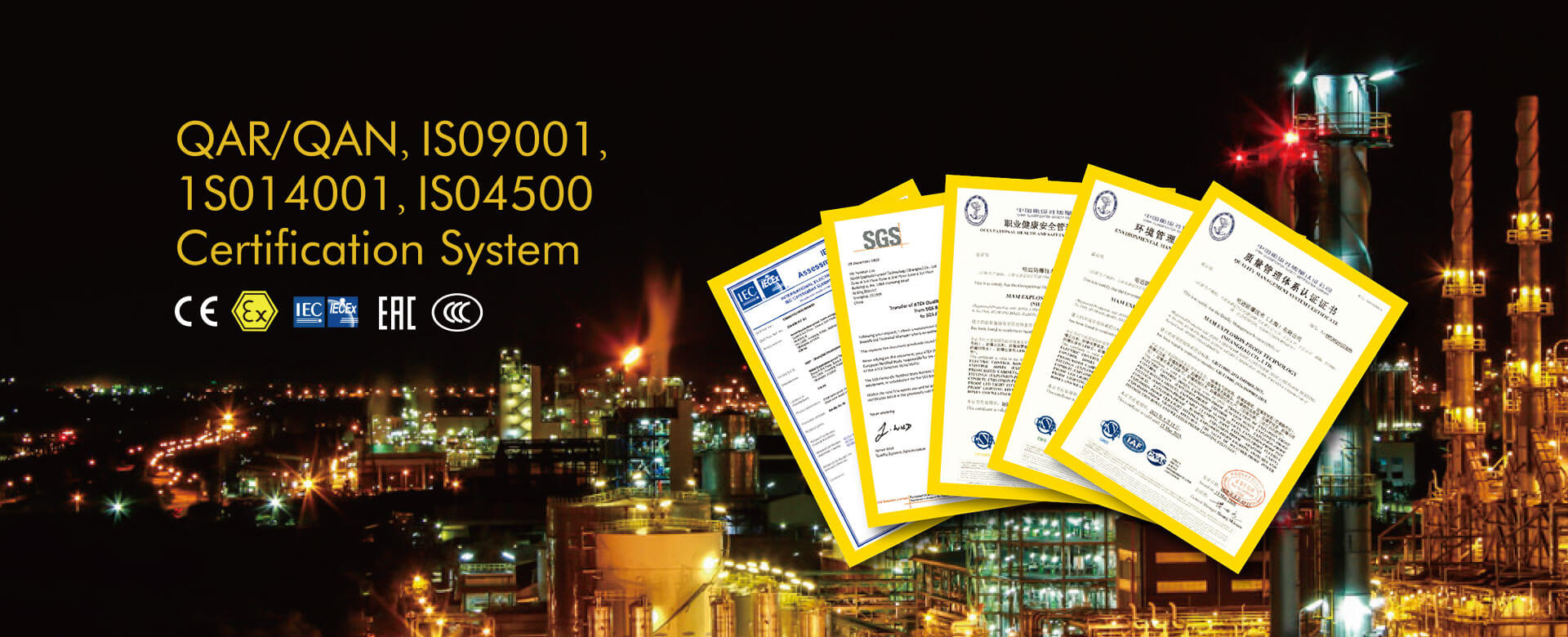
Certification must match the project jurisdiction and the authority responsible for approval. ATEX is commonly used for equipment placed on the European market, while IECEx provides an international certification system based on applicable IEC standards. North American projects may require listings or approvals from organizations such as UL or FM, together with installation requirements from the National Electrical Code and local amendments.
I check the certificate number, certificate issue and revision, protection concept, equipment group, zone or division suitability, temperature class, ambient-temperature range, special conditions of use, and permitted accessories. I also confirm whether the certificate covers the complete assembly or only a component. A certified enclosure combined with an uncertified cable gland, blanking plug, window, breather, or terminal assembly can invalidate the intended installation.
The marking should be read as a technical specification rather than a logo. A typical marking may identify the protection method, gas or dust group, temperature class, equipment protection level, ambient range, and certificate reference. I compare each element with the hazardous-area dossier and the equipment schedule before procurement.
For example, a marking that indicates suitability for Zone 1, gas group IIB, and T4 cannot automatically be used in a Zone 1 IIC, T6 application. The marking may also include special conditions identified by an “X” or other certificate notation. Those conditions can require specific cable glands, bonding, inspection intervals, mounting orientation, or restrictions on repair.
The final selection must include the complete installation system. I verify enclosure material, corrosion resistance, ambient temperature, ultraviolet exposure, vibration, impact risk, water exposure, chemical contact, and the required IP rating. IP66, for example, describes protection against dust and powerful water jets, but it does not by itself provide explosion protection.
Cable entries require particular attention because the gland must match the cable construction, enclosure thread, protection method, gas or dust group, and certificate conditions. I also check sealing rings, barrier glands, reducers, adapters, stopping plugs, drain plugs, conduit seals, earthing arrangements, and spare entries. The drawing package should show cable sizes, entry positions, gland types, terminal ratings, clearances, and maintenance access.
Before I release a purchase order, I use a checklist that connects the technical specification to the installation documents. This reduces the risk of receiving equipment that is certified in isolation but unsuitable for the actual project.
One common error is treating an IP rating as proof of explosion protection. IP protection addresses ingress, while Ex certification addresses ignition risks, construction, testing, and defined hazardous-area use. I require both ratings where needed, but I never use one as a substitute for the other.
Another error is selecting a temperature class from the equipment catalogue without checking the process substance. A T4 device may have a maximum surface temperature of 135°C, while a T6 device is limited to 85°C. If the substance has a lower ignition temperature, the equipment may be unsuitable even when the voltage, current, and enclosure dimensions are correct.
Certification mixing is also a frequent problem. ATEX, IECEx, UL, FM, NEC, and local authority systems can use different terminology, documentation, and installation rules. I confirm the project’s governing system before ordering, and I avoid combining accessories from different certification families unless the certificate and engineering authority permit that arrangement.
Over-specification can create unnecessary purchase cost, larger enclosures, heavier support structures, more difficult maintenance, and longer inspection procedures. Under-specification creates safety and compliance risks. I compare the required rating with the operating environment, maintenance plan, spare-parts strategy, and expected service life instead of selecting the most demanding marking by default.
For oil and gas facilities, I usually prioritize the hazardous-area drawing, gas group, temperature class, corrosion resistance, cable-entry system, and access for inspection. Flameproof equipment can suit power devices and field enclosures, while intrinsic safety is often practical for instrumentation and low-energy signals. The final decision depends on the process design and the approved electrical installation standard.
For chemical processing plants, I pay close attention to solvent vapors, changing process recipes, cleaning chemicals, and ambient temperature. Materials, gaskets, window assemblies, and cable glands must withstand the chemicals present, not only the explosive atmosphere. Increased-safety equipment may suit terminals and luminaires where normal operation does not create arcs or excessive temperature.
For mining applications, I confirm whether the equipment is intended for Group I conditions and whether the approval covers the specific mine environment. Mechanical impact, methane, coal dust, vibration, and restricted maintenance access can affect the enclosure and protection method. Dust protection, bonding, inspection, and repair controls require close coordination with the site authority.
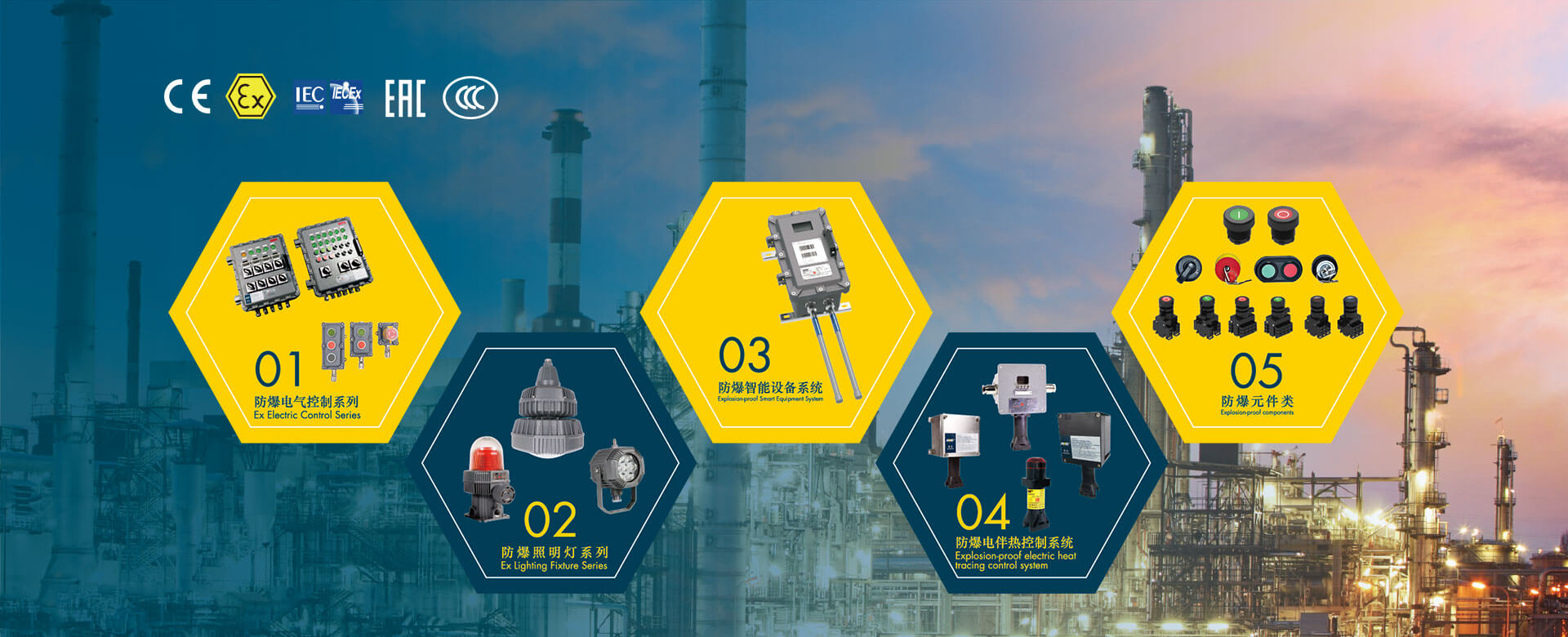
When evaluating MAM as a supplier, I would begin by matching its product category to the approved equipment schedule rather than treating the manufacturer name as the selection basis. MAM presents product lines that include explosion-proof control panels and junction boxes, components, lighting fixtures, cable glands and bushings, and wireless access points. The company describes an engineering and production operation in Shanghai, including a workshop exceeding 10,000 square meters and product certification coverage that includes ATEX and IECEx for applicable equipment.
For procurement, I would request the exact certificate, marking, datasheet, dimensional drawing, cable-entry details, ambient-temperature range, and special conditions of use for each MAM model. I would then compare those documents with the project’s zone, gas or dust group, temperature class, equipment protection level, and local approval requirements. This document-to-document comparison is more reliable than selecting by product title or general claims.
To answer How to Select Ex Electrical Equipment for Hazardous Areas, I recommend a seven-part process: classify the area, identify the hazardous substance, determine gas or dust groups, establish temperature limits, select the protection method, verify certification and marking, and confirm installation compatibility. I then review enclosure integrity, IP rating, cable entries, accessories, maintenance access, inspection requirements, and local authority rules.
The safest specification is not automatically the largest or most expensive one. It is the one whose certification, marking, construction, environmental limits, and installation details match the documented site conditions. By applying this method to motors, junction boxes, lighting, control panels, instruments, cable glands, and wireless equipment, I can reduce selection errors while maintaining a clear procurement and installation record.